
Ask a cat owner why it has been three years and the answer is rarely money or time. It is the chasing, the yowling in the car, and the guilt afterward. Cats see a veterinarian far less often than dogs, and for many households the carrier is the reason. The visits they skip are the ones that catch things early.
Why the carrier is the whole problem
For most cats, the carrier appears once or twice a year if that, smells of the last bad day, and is immediately followed by a car. Cats learn associations fast and hold them, so by the second or third time the carrier itself is the frightening object. The cat is not reacting to the vet; they are reacting to the box.
That is useful news, because the carrier is the part you control entirely, and it is fixable at home over a couple of weeks without any special equipment.
Turning it into furniture
The goal is a carrier that lives in your house like a cat bed, not one that comes out of a closet.
- Leave it out permanently, in a room the cat actually uses, with the door removed or tied open. This single change does most of the work.
- Choose a hard-sided carrier with both a front door and a top opening, and ideally one whose top half unclips off entirely. A cat who can be lifted out vertically, or examined sitting in the bottom half, has a completely different visit from one dragged out of a front opening.
- Put familiar bedding in it — something from their own bed, unwashed. Their own smell matters more than anything you can buy.
- Feed near it, then in it. Start with meals beside the carrier, then just inside, then at the back. Take a week or two. If the cat backs off, go back a step rather than pushing.
- Drop a few pieces of food in it at random times so the cat finds something good there when you are not watching.
- Practice the door closing for ten seconds, then opening again, with something good involved. Then thirty seconds. Then a lap of the hallway.
- Do a car trip that goes nowhere. Around the block, back home, food, done. The car is a separate association and it needs its own practice.
Two things that help on the day itself: cover the carrier with a towel so the cat is not watching the world go past, and secure it with a seat belt, or on the floor behind a front seat, rather than letting it slide. A cat who arrives already overwhelmed has used up the calm we would otherwise have to work with.
What we change at this end
The other half of this is ours, and it is why we put the work into calm, low-stress handling for cats rather than just being a practice that sees them.
In practical terms that means letting a cat come out of the carrier in their own time rather than being pulled out, examining them in the bottom half of the carrier or on a towel from home where that works, keeping the handling light and brief, doing the parts that matter most first in case patience runs out, and not pinning a cat who is coping until they stop coping. A cat who is allowed to hide under a towel during an examination is usually a cat who can be examined.
It also means being honest about sequencing. For a genuinely frightened cat, we would rather do a short, successful visit and bring them back than force a complete workup into one session and lose the cat’s cooperation for years. And for cats who find it genuinely unbearable, there are things we can give beforehand to take the edge off the journey — worth asking about rather than enduring another bad trip.
Our medical services are where the actual examination happens, and because we see dogs and cats only, the team handling your cat does feline work every day rather than occasionally. Calling ahead also lets us time your arrival so there is less sitting around. In-house blood work and imaging means most answers come back during the visit rather than requiring a second trip, which matters a great deal when the trip is the hard part. Where something needs to be seen the same day, our urgent care covers it.
Why the skipped visits matter
Cats are built to conceal illness, and they are good at it. Three of the conditions we look hardest for in middle-aged and older cats — an overactive thyroid, failing kidneys, and diabetes — mostly announce themselves with changes an owner can see at home: drinking more, the litter box getting heavier, weight coming off, sometimes while the cat is still eating well and sometimes with the appetite dropping away. Early kidney change is the quiet one, and often shows on a blood sample before anything shows at home.
Every one of those is better news when found early. All three show up on a blood and urine sample — and a calm cat gives us cleaner numbers, since a frightened cat’s blood sugar can read high on its own. And none of them will be found in a cat who has not been in for three years because the carrier is a fight.
So the carrier work is not a nicety. It is what makes the rest possible.
Our hours
We are open Monday through Saturday from 9:00 am to 8:00 pm. We are closed on Sundays. Calling ahead lets us get a quiet room ready, which for a nervous cat is worth doing.
If your cat is straining in the litter box without producing urine, struggling to breathe, has stopped eating for more than a day, or is hiding and unresponsive, that needs to be seen the same day rather than waiting for a calmer moment. If we are closed, go to an open 24-hour emergency hospital.
Common questions
How long does the carrier training take?
Two to three weeks of a few minutes a day for most cats. Cats with a long history of bad trips take longer, and that is fine — the alternative is another decade of not going.
My cat hides the moment the carrier appears. Where do I even start?
Start by not needing it. Leave it out for two weeks with food appearing in it and do nothing else. Most cats will investigate it once it stops predicting anything.
Should I use a soft carrier instead?
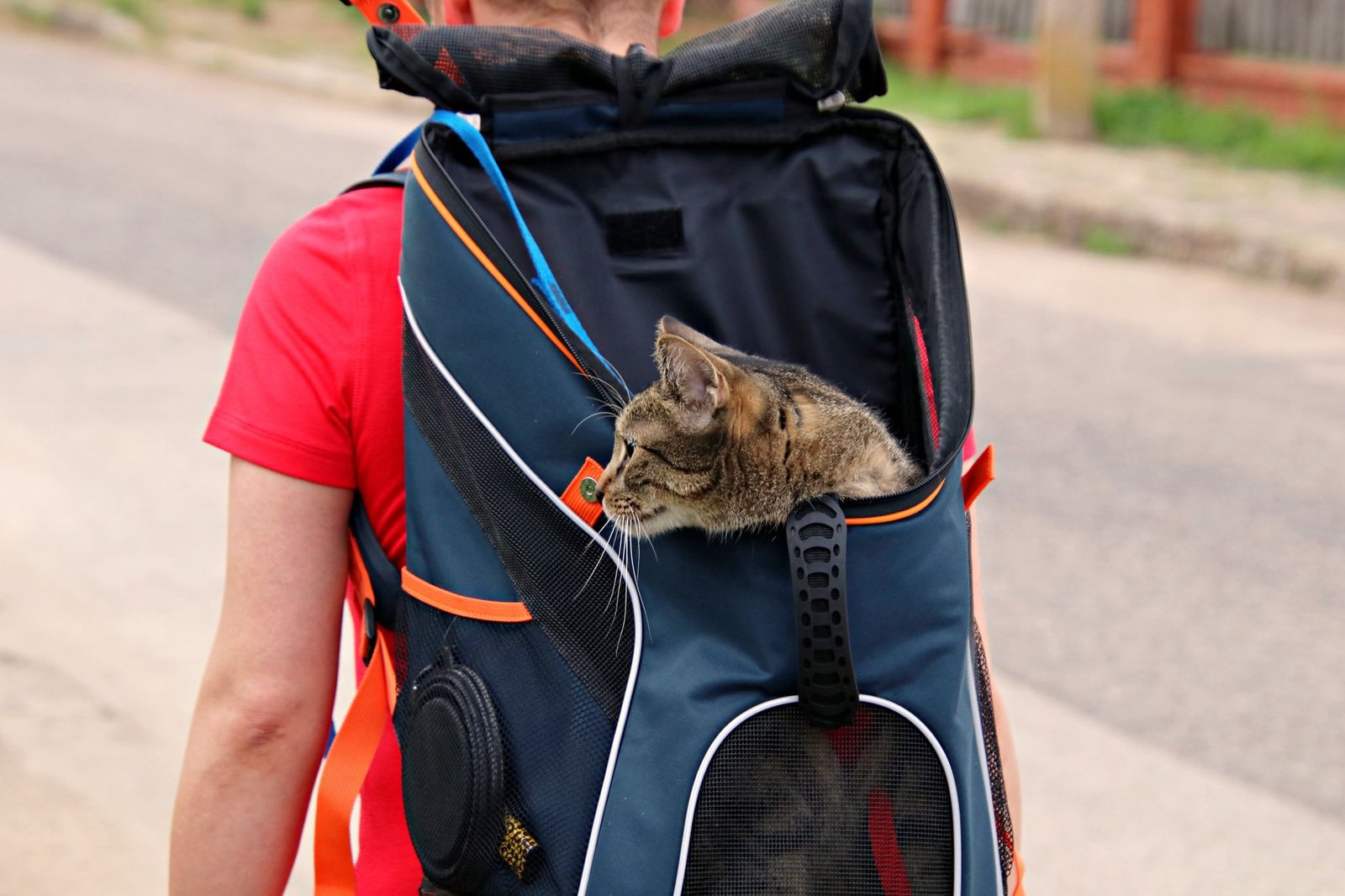
Soft carriers are easier to carry and harder to examine a cat in. A hard carrier with a removable top is better for the visit, which is the part we are trying to improve.
Is it kinder to just not take them?
It feels kinder and it is not. The cost is the conditions we find late instead of early, and in cats that gap is often the difference between managing something and reacting to it.
Can I bring two cats in one carrier?
Better not, even if they are friends at home. Stressed cats redirect onto each other, and a fight in a carrier makes the next ten visits harder.
Speak to the team at Revive Veterinary Care
Get the carrier out of the closet tonight, take the door off, and put the cat’s own bedding in it. Then call us and tell us you have a nervous cat — it changes how we book you in.
Published by the team at Revive Veterinary Care.
This article is educational in nature and is not a replacement for hands-on assessment of your own pet by a veterinarian.
Revive Veterinary Care
718 El Camino Real, San Carlos, CA 94070
Phone: (650) 750-0777
Hours: Monday to Saturday 9:00 am to 8:00 pm; closed Sunday